
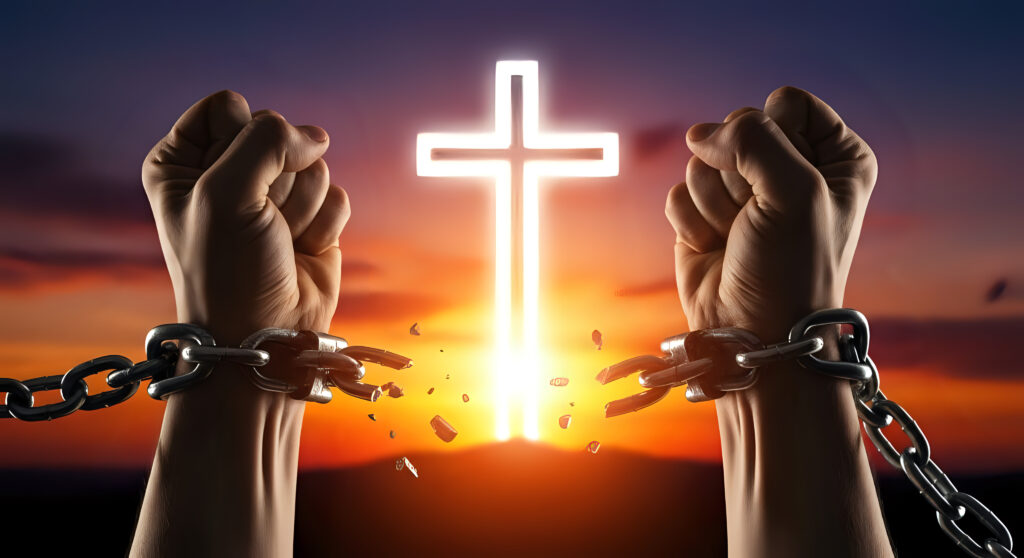
A Gospel-Centered Framework for Change, Hope, and Lasting Transformation
One of the phrases I often use in counseling, coaching, and teaching is simple, memorable, and deeply theological: “I can’t. He can. He has. He does. He will. I can only in Him.”
This is not a motivational slogan. It is not positive thinking baptized with religious language; it is a Gospel-shaped way of understanding reality. It helps people locate themselves rightly before God, understand who God is, remember what God has done, recognize what God is doing, rest in what God will do, and then live faithfully in the strength He supplies.
At its core, this framework moves us away from self-sufficiency and toward Christ-dependence. It exposes the myth that we are enough on our own, while anchoring us in the sufficiency of God revealed in Jesus Christ.
Let us walk through each phrase carefully.
1. “I Can’t”: The Honest Confession of Human Inability
The Christian life does not begin with strength. It begins with honesty.
“I can’t” is not self-pity. It is not defeatism; it is clarity. It is the recognition that, apart from God’s grace, we lack the ability to live, love, change, obey, endure, or persevere in a way that truly honors God.
Scripture is unapologetically clear about this reality.
Jesus says, “Apart from Me you can do nothing” (John 15:5).
Paul writes, “I know that nothing good dwells in me, that is, in my flesh” (Romans 7:18).
Jeremiah reminds us that the heart is “deceitful above all things” (Jeremiah 17:9).
“I can’t” confronts the lie of moral independence. It acknowledges that we cannot perfectly love God or others, control our emotions, fix our past, overcome sin in our own strength, or secure our future. We fail. We fall short, and we repeat patterns we promised we would never return to.
In counseling, this is often where people feel stuck. They see their sin, their struggles, their brokenness, and they stop there. Those who feel stuck live in shame; they live in guilt. They live in regret.
But stopping at “I can’t” is not humility. It is despair.
“I can’t” is meant to be a doorway, not a destination.
2. “He Can”: The Wonder of Who God Is
If “I can’t” reveals our inability, “He can” proclaims God’s sufficiency.
This is where our focus must shift away from ourselves and onto the character and power of God.
God is sovereign. Nothing surpasses Him.
God is wise. He never misjudges. Nothing surprises Him. He never panics.
God is loving. His compassion never runs dry.
God is gracious and merciful. He gives what we do not deserve and withholds what we rightly deserve.
God is faithful. He keeps every promise He makes.
He is omnipotent. All power belongs to Him.
He is omniscient. God knows all things, including the thoughts we never say out loud.
He is omnipresent. He is never absent from our suffering or our struggle.
Scripture declares, “With God all things are possible” (Matthew 19:26).
Paul reminds us that God is able “to do far more abundantly than all that we ask or think” (Ephesians 3:20).
“He can” lifts our eyes off our limitations and fixes them on the limitless nature of God. It reminds us that transformation does not depend on our resolve, but on His power.
3. “He Has”: Remembering God’s Faithfulness in the Past
Faith grows when we remember.
“He has” calls us to look backward and see what God has already done, both in Scripture and throughout history. God does not merely promise. He acts; He intervenes; and He redeems.
The Bible is a record of God keeping His Word with person after person, generation after generation.
Abraham doubted, yet God remained faithful.
Moses feared, yet God delivered.
David sinned, yet God restored.
Israel wandered, yet God preserved.
As Paul writes, “If we are faithless, He remains faithful” (2 Timothy 2:13).
Church history tells the same story.
Augustine was enslaved to lust and pride, yet God transformed him into one of the greatest theologians in church history.
Martin Luther was guilt-ridden and tormented by fear, yet God used him to recover the doctrine of justification by faith.
John Newton was a slave trader, yet God redeemed him and gave the world “Amazing Grace.”
Nicky Cruz was a violent gang leader, yet God radically transformed his life, as told in The Cross and the Switchblade.
God has a long track record of transforming broken people. That includes you.
4. “He Does”: Recognizing God’s Present Grace
God is not only active in the past. He is at work right now.
“He does” calls us to recognize the present grace of God in our lives, even when circumstances are hard, unstable, or deeply painful. God’s faithfulness is not measured only by what we have, but by how He sustains us where we are.
First and foremost, He gives us salvation today, not just someday. In Christ, we are forgiven, reconciled, and secure, even when much of life feels uncertain.
God also sustains us moment by moment. He gives breath, strength for today, and grace sufficient for the next step. As Scripture reminds us, “In Him we live and move and have our being” (Acts 17:28).
For some, God’s grace is seen in provision, relationships, or stability.
For others, it is seen in endurance, restraint, comfort, protection, or the quiet strength to persevere.
God gives us His presence. He draws near to the brokenhearted. He does not abandon His people in suffering, loss, or waiting. Even when circumstances do not change, He remains with us.
He also gives daily mercies, often in small and easily overlooked ways. Sometimes grace looks dramatic. Other times it looks like sustaining faith, timely truth, or the courage to keep going.
As Paul proclaimed, God is the One who “gives to all mankind life and breath and everything” (Acts 17:25). That “everything” may not always look the way we expect, but it is always shaped by His wisdom and love.
Learning to say “He does” helps us become attentive to God’s present work, not just His past acts or future promises. It cultivates humility, trust, and a growing awareness that we are being upheld by grace even now.
5. “He Will”: Resting in God’s Promises for the Future
Christian hope is forward-looking.
“He will” anchors us in the promises of God that extend beyond today. Scripture is filled with hundreds of promises about what God will do, not only in this life, but in the life to come.
Paul writes, “I am sure of this, that He who began a good work in you will bring it to completion at the day of Jesus Christ” (Philippians 1:6).
Our future is secure.
Our salvation will be completed.
Sin will be fully eradicated.
Tears, sorrow, death, and suffering will be no more.
Revelation promises a day when God will make all things new. That hope changes how we live now.
Paul himself said that he desired to depart and be with Christ, yet he recognized that God had a purpose for him here and now. He did not live trapped in regret over his past, because grace had redefined his future.
6. “I Can Only in Him”: Living from Grace, Not Guilt
This final phrase brings everything together.
“I can only in Him” does not deny responsibility. It redefines it.
This is where the Gospel reshapes our motivation. When we remain trapped in guilt, we miss grace. When we miss grace, we fail to live lives marked by gratitude. And when gratitude is absent, peace disappears.
The Heidelberg Catechism frames the Christian life as guilt, grace, and gratitude. I often describe it as sin, Savior, and satisfaction.
Do not get stuck in your sin.
Turn to the Savior.
Find your satisfaction in Him.
Paul captures this beautifully when he writes, “I can do all things through Him who strengthens me” (Philippians 4:13).
This is not self-confidence. It is Christ-confidence.
We live obediently not to earn grace, but because grace has already been given. Gratitude becomes the fuel for faithful living.
Conclusion: A Framework for the Christian Life
“I can’t, He can, He has, He does, He will, I can only in Him” is not just a phrase. It is a Gospel-shaped lens for understanding life.
It keeps us humble without crushing us.
This framework keeps us hopeful without inflating us.
It keeps us dependent without paralyzing us.
When we live this way, we stop striving to be our own savior and start resting in the One who already is.
And that is where real change begins.
Bringing It Home
As you reflect on the phrase “I can’t. He can. He has. He does. He will. I can only in Him,” remember that real change does not begin with trying harder or doing better in your own strength. Lasting transformation comes as the Spirit of God uses the truth of the Gospel to reorient your heart, reshape your thinking, and redirect your trust.
When you fixate on your failures, weaknesses, or past sins, it is easy to become discouraged or paralyzed. But the Gospel invites you to move beyond guilt and look to grace. Because of Christ, you are forgiven, accepted, and secure. That frees you to be honest about your limitations, hopeful about God’s power, and faithful in taking the next step of obedience.
Where you have been tempted to live as though everything depends on you, the Lord invites you to rest in who He is and what He has done. Where fear, regret, or self-reliance have shaped your responses, they do not have to have the final word. God delights to meet us in our weakness and to work in us and through us as we learn, day by day, to depend on Him.
This framework is not about perfection. It is about posture. It is about learning to live with open hands, trusting that the same God who has been faithful in the past is at work in the present and will remain faithful in the future.
Reflection Questions
Use these questions for personal reflection, journaling, or conversation with a trusted friend, mentor, or counselor:
- When you think about the phrase “I can’t,” where do you most clearly see your limitations right now? How do you typically respond to those limitations?
- Which part of this framework do you find most difficult to believe or live out: He can, He has, He does, or He will? Why do you think that is?
- How has focusing on past failures or present struggles shaped your view of yourself or God? What would it look like to intentionally turn your attention toward grace instead?
- In what ways can you begin practicing “I can only in Him” this week through prayer, dependence, or small steps of obedience?
- What promise of God, or passage of Scripture, do you need to return to regularly as you seek to grow in trust and gratitude?
Take time this week to sit quietly with these questions. Meditate on the truths that stood out to you, and journal your thoughts and prayers. Ask the Lord to help you identify one small, concrete way to live more dependently on Him in the days ahead.
Stay Connected and Grow With Us
If you would like ongoing help applying these truths in everyday life, I would be honored to walk with you.
You can learn more about coaching and take the next step by visiting
https://community.jameslongjr.org/checkout/the-coaching-circle
You can also explore additional articles, podcasts, and resources focused on biblical mental, emotional, and relational health at jameslongjr.org.
The Lessons for Life community exists to provide practical teaching, honest encouragement, and biblically grounded tools for real-life struggles. I would be honored to have you join us as we learn together how to live with greater faith, freedom, and dependence on Christ.

Dr. James Long Jr. is pastor of The Chapel at Warren Valley, a professor at a Christian university, and a Board-Certified Counselor and Certified Biblical Counselor. For nearly 35 years, he has equipped individuals and families to pursue emotional strength, relational wisdom, and spiritual clarity. He is the founder of Lessons for Life, an online coaching community designed to help people take actionable steps toward lasting change through Christ-centered teaching, practical tools, and guided coaching pathways. Explore courses, resources, and coaching opportunities at jameslongjr.org
